Product Description
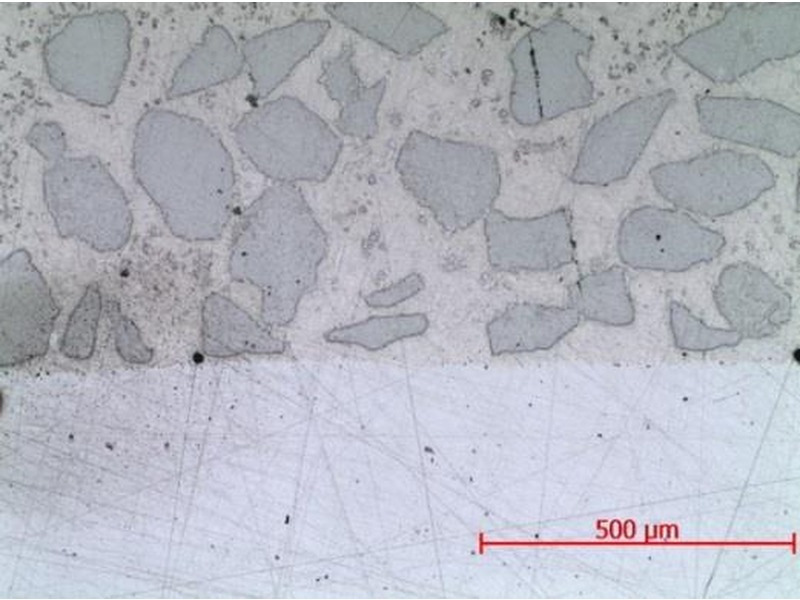
Low Alloy Carbon Steel Hardfacing Flux-Cored Welding Wires (TW106–TW260 Series) — covers a full portfolio of gas-shielded (-G), open-arc (-O), and submerged-arc (-S) low alloy carbon steel flux-cored hardfacing wires. Engineered for build-up, crack-resistant buffer layers, metal-to-metal wear, hot-work roll rebuilding, and high-hardness carbide-reinforced surfacing.
Product core positioning: Versatile Fe-Cr-Mo-V-W-Nb-TiC low-alloy hardfacing FCW family spanning 150–300 HB build-up deposits up to 58–63 HRC abrasive wear layers.
Part 1: Build-Up & Medium-Hardness Series (TW106–TW223) — Chemical Composition (wt%) & Hardness
| Product | C | Si | Mn | Cr | Ni | Mo | V | Nb | Fe | Hardness |
|---|---|---|---|---|---|---|---|---|---|---|
| TW106-G / TW106-S | 0.12 | 0.80 | 2.70 | 1.00 | — | — | — | — | Bal. | 180–220 HB |
| TW107-S | 0.08 | 0.65 | 1.25 | — | 2.75 | 2.75 | — | — | Bal. | 180–210 HB |
| TW110-S | 0.18 | 0.35 | 0.55 | 0.95 | — | 0.20 | — | — | Bal. | 210–240 HB |
| TW111-S | 0.20 | 0.42 | 1.50 | 2.25 | 0.03 | 0.18 | — | — | Bal. | 30–35 HRC |
| TW112-G / TW112-S | 0.12 | 0.40 | 2.00 | 2.00 | 0.40 | 0.20 | — | — | Bal. | 28–32 HRC |
| TW115-S | 0.04 | 0.60 | 1.00 | 1.85 | 0.80 | 0.50 | 0.05 | — | Bal. | 175–225 HB |
| TW116-G / TW116-O / TW116-S | 0.03 | 0.42 | 1.05 | 2.30 | 1.12 | 0.65 | 0.065 | 0.095 | Bal. | 250–300 HB (after 630°C: 210–230 HB) |
| TW205-G / TW205-S | 0.04 | 0.60 | 1.20 | 7.50 | — | 7.50 | — | 7.50 | Bal. | 180–220 HB |
| TW205Nb-S | 0.04 | 0.60 | 1.20 | 8.50 | — | 8.50 | 0.05 | 8.50 | Bal. | 150–200 HB |
| TW213L-S | 0.04 | 0.60 | 1.20 | 5.20 | — | 1.65 | 0.75 | — | Bal. | 45–50 HRC (after 550°C: 42–45 HRC) |
| TW213-S | 0.04 | 0.60 | 1.20 | 4.80 | — | 1.50 | 1.00 | — | Bal. | 53–57 HRC |
| TW214-S (Tempered) | 0.12 | 0.38 | 1.60 | 5.25 | — | 1.35 | 0.75 | — | Bal. | 35–38 HRC (after 650°C: 40–45 HRC) |
| TW214-S | 0.12 | 0.38 | 1.60 | 5.25 | — | 1.35 | 0.75 | — | Bal. | 33–38 HRC |
| TW215-S | 0.12 | 0.60 | 2.15 | 2.85 | 1.00 | 0.55 | 0.06 | — | Bal. | 38–42 HRC |
| TW223L-O | 0.12 | 0.45 | 1.32 | 3.35 | — | 1.65 | 0.25 | 0.18 | Bal. | 38–42 HRC |
| TW223-S | 0.25 | 0.35 | 1.35 | 3.35 | — | 1.65 | 0.50 | — | Bal. | 42–45 HRC (after 550°C: 38–42 HRC) |
Part 2: High-Hardness & Carbide-Reinforced Series (TW224–TW260) — Chemical Composition (wt%) & Hardness
| Product | C | Si | Mn | Cr | Ni / Nb | Mo / B | V / Ti | W | Fe | Hardness |
|---|---|---|---|---|---|---|---|---|---|---|
| TW252-S (NH-69S) | 0.18 | 0.48 | 1.70 | 3.50 | Ni: 3.05 | Mo: 2.15 | V: 0.45 | — | Bal. | 50–55 HRC (after 500°C: 46–49 HRC) |
| TW254-S | 0.25 | 0.65 | 1.85 | 4.58 | — | Mo: 1.70 | V: 0.23 | 2.53 | Bal. | 50–53 HRC (after 535°C: 45–48 HRC) |
| TW255-S | 0.42 | 0.62 | 1.40 | 9.38 | — | Mo: 1.38 | V: 0.60 | 1.22 | Bal. | 56–58 HRC (after 550°C: 53–56 HRC) |
| TW255Mo-S | 0.33 | 0.48 | 2.00 | 4.35 | — | Mo: 3.00 | V: 0.50 | 2.10 | Bal. | 54–58 HRC (after 550°C: 51–53 HRC) |
| TW256-S | 0.30 | 0.43 | 2.10 | 5.48 | — | Mo: 1.80 | V: 0.60 | 2.00 | Bal. | 56–59 HRC (after 550°C: 53–55 HRC) |
| TW258L-O / TW258L-S | 0.23 | 0.60 | 1.50 | 5.60 | — | Mo: 1.50 | V: 0.05 | 1.30 | Bal. | 43–48 HRC |
| TW258-O / TW258-S | 0.50 | 0.60 | 1.50 | 5.80 | — | Mo: 1.80 | — | 1.70 | Bal. | 54–57 HRC |
| TW258TiC-O | 1.80 | 0.25 | 0.85 | 6.10 | — | Mo: 1.40 | Ti: 5.50 | — | Bal. | 58–60 HRC |
| TW224-S | 0.30 | 0.35 | 1.95 | 5.40 | — | Mo: 1.20 | V: 1.00 | 1.55 | Bal. | 55–58 HRC (after 555°C: 50–54 HRC) |
| TW225-S | 0.25 | 0.35 | 1.80 | 3.30 | — | Mo: 2.70 | V: 1.55 | — | Bal. | 42–45 HRC (after 540°C: 37–41 HRC) |
| TW226-S | 0.28 | 0.35 | 1.68 | 5.35 | — | Mo: 4.15 | V: 0.25 | — | Bal. | 51–53 HRC (after 540°C: 46–49 HRC) |
| TW238-S | 0.30 | 0.36 | 1.60 | 3.55 | Nb: 1.70 | Mo: 3.00 | V: 0.60 | 1.70 | Bal. | 40–45 HRC (after 550°C: 35–38 HRC) |
| TW242-S | 0.12 | 0.80 | 1.90 | 2.50 | — | Mo: 0.21 | V: 0.15 | — | Bal. | 38–42 HRC |
| TW243-S (NH-243) | 0.51 | 0.60 | 1.90 | 3.32 | Nb: 2.25 | Mo: 3.12 | V: 0.71 | — | Bal. | 55–56 HRC (after 550°C: 48–52 HRC) |
| TW249-G / TW249-S | 0.28 | 0.60 | 1.80 | 5.42 | Nb: 0.81 | Mo: 3.00 | V: 0.23 | 1.60 | Bal. | 51–53 HRC (after 530°C: 46–49 HRC) |
| TW260TiC-O | 1.70 | 0.25 | 0.80 | 5.50 | — | B: 1.00 | Ti: 5.30 | 1.40 | Bal. | 58–62 HRC |
| TW260NbC-O / TW260NbC-S | 1.30 | 1.20 | 0.70 | 5.30 | Nb: 8.30 | B: 2.00 | — | 1.20 | Bal. | 58–63 HRC |
Core Advantages & Features
- Full process flexibility across Gas-Shielded (-G), Open-Arc (-O), and Submerged-Arc (-S) welding.
- Wide hardness gradient from machinable 150–300 HB buffer layers to 58–63 HRC TiC/NbC wear overlays.
- Excellent temper resistance for steel mill rolls operating at 500–650 °C.
Typical Application Fields
- Steel mill backup rolls, pinch rolls, and hot/cold work rolls
- Crawler undercarriage components, shafts, gears, and crane wheels
- Earthmoving, mining, and quarry wear parts
- Crack-arrest buffer layers prior to high-alloy hardfacing