Product Description
Product Description:
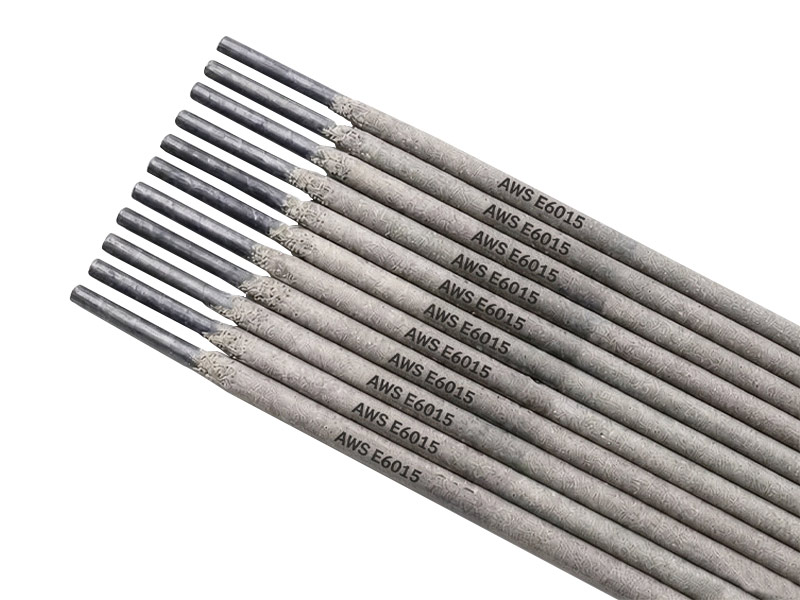
E6015 is a low-hydrogen, sodium-type coated carbon steel electrode specifically designed for demanding steel structures. Engineered to meet the rigorous requirements of shipbuilding—such as welding thick plates, all-position welding, and ensuring high airtightness—it features an optimized coating formula that guarantees exceptional arc stability and ultra-low hydrogen content. Widely used for welding critical structural components such as ship hulls, bulkhead stiffeners, and engine room assemblies, the electrode effectively withstands structural stresses in harsh marine environments.
Product Parameters:
| AWS Standard | AWS A5.1 E6015 |
| Coating Type | Low-hydrogen sodium type |
| Current Type | DCEP (Direct Current Electrode Positive) |
| Tensile Strength (Rm) | ≥ 420 MPa |
| Yield Strength (ReL) | ≥ 330 MPa |
| Elongation (A5) | ≥ 22% |
| Impact Energy at -30°C (AKV) | ≥ 27 J |
| Diffusible Hydrogen Content | ≤ 8.0 mL/100g (Glycerin method) |
| Applicable Diameters | 2.5mm, 3.2mm, 4.0mm, 5.0mm |
Main Functions & Advantages:
- Excellent all-position welding performance: Whether for horizontal butt welds, vertical-up welding, or highly challenging overhead welding, E6015 maintains consistent droplet transfer and a stable, non-deflecting arc, ensuring high weld quality for the complex internal structures of ship hulls.
- Deep penetration and weld soundness: Optimized arc force ensures deep penetration into thick steel plates, effectively minimizing incomplete fusion defects and guaranteeing robust structural support for the hull.
- Automatic slag detachment and aesthetic finish: Upon completion of welding, the slag detaches naturally, revealing a weld bead with a fine, smooth ripple pattern, which significantly reduces the time and labor required for post-weld grinding.
- Superior crack resistance: Its low-hydrogen characteristics fundamentally reduce the risk of cold cracking, making it particularly suitable for the assembly and welding of high-strength shipbuilding steels.
Typical Applications: